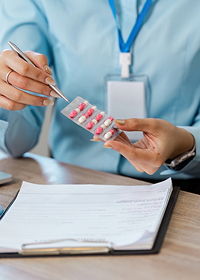


It is one of the most common fears expressed in the consultation room. A patient sits down, clearly struggling with anxiety or depression that is impacting their daily life, yet they hesitate when medication is mentioned. Finally, they voice the concern that has been holding them back: “I don’t want to get addicted.” or “I don’t want to rely on a crutch.”
This fear is understandable. We live in a society that simultaneously over-prescribes and stigmatizes those who take prescriptions. We hear horror stories about the opioid crisis and conflate them with the use of antidepressants or mood stabilizers. We praise “natural” healing and view pharmaceutical support as a sign of weakness or a lack of willpower.
However, there is a fundamental and critical distinction that often gets lost in this cultural conversation: the difference between medication dependence and medical necessity.
Understanding this distinction is key to making informed decisions about your mental health. It is the difference between losing control of your life to a substance and using a tool to reclaim your life from an illness.
This guide explores the nuances of physical dependence versus addiction, the stigma surrounding psychiatric care, and how an integrative psychiatry approach helps patients navigate these complex waters with safety and confidence.
Defining the Terms: Precision Matters
To have a productive conversation about medication, we must first agree on what the words actually mean. In casual conversation, “addiction,” “dependence,” and “reliance” are often used interchangeably. In medicine, they describe vastly different biological and behavioral states.
What is Medical Necessity?
Medical necessity refers to the clinical requirement for a treatment to manage a condition, prevent progression, or alleviate suffering. It is not about “wanting” a drug; it is about the body or brain requiring specific support to function correctly.
Consider a Type 1 diabetic. They must take insulin every day to survive. If they stop, they will become critically ill. Is the diabetic “addicted” to insulin? No. The insulin is a medical necessity. Their body cannot produce it, so they must supply it exogenously to maintain homeostasis.
In mental health, the parallel is strong. For individuals with conditions like Bipolar Disorder, Schizophrenia, or severe recurrent Major Depressive Disorder, the brain may have a biological inability to regulate certain neurotransmitters. Medication acts as the stabilizer. It is not a recreational choice; it is the floorboards upon which the rest of their life is built.
What is Medication Dependence?
Medication dependence is a physiological state. It means that the body has adapted to the presence of a drug, and if you stop taking it abruptly, you will experience withdrawal symptoms.
This is a neutral biological fact. It happens with many non-psychiatric drugs as well.
- If you take beta-blockers for heart conditions and stop suddenly, you can have a rebound heart attack.
- If you take corticosteroids for asthma and stop suddenly, your adrenal glands can crash.
- If you take an SSRI (antidepressant) and stop suddenly, you may experience “discontinuation syndrome” (flu-like symptoms, brain zaps, anxiety).
Crucially, dependence is NOT addiction. Dependence simply means the body has acclimated. It does not imply harm, craving, or loss of control. It just means that if you ever decide to stop, you must do so gradually under the guidance of a professional in Medication Management.
What is Addiction (Substance Use Disorder)?
Addiction is characterized by a set of destructive behaviors and psychological cravings. It is distinct from physiological dependence, though they can overlap.
Key features of addiction include:
- Compulsion: An intense urge to use the substance despite wanting to stop.
- Loss of Control: Taking more than intended or being unable to cut down.
- Harmful Consequences: Continuing to use despite negative impacts on work, relationships, or health.
- Psychological Craving: The drug is used to escape reality or get “high,” rather than to function or treat a specific symptom.
Most psychiatric medications (like antidepressants, mood stabilizers, and antipsychotics) do not cause addiction. They do not produce a “high.” You do not crave your Zoloft. You do not rob a store to get more Lithium. You might be physiologically dependent on them (meaning you can’t stop cold turkey), but you are not addicted.
The “Crutch” Metaphor: Reframing the Narrative
The most pervasive stigma in mental health is the idea that medication is a “crutch.” The implication is that if you were just stronger, or tried harder, or did more yoga, you wouldn’t need it.
Let’s lean into that metaphor for a moment. If you break your leg, do you refuse crutches? Do you crawl around in pain, damaging the bone further, because you want to be “independent”? Of course not. You use the crutches to take the weight off the injury so it can heal.
Psychiatric medication often functions the same way.
- It lowers the noise: It turns down the volume of anxiety so you can hear yourself think.
- It creates a floor: It stops you from falling into the abyss of depression so you can stand up and go to therapy.
- It enables the work: It gives you the energy to cook healthy meals, exercise, and socialize—the very things that help you heal long-term.
When we view medication as a tool for empowerment rather than a sign of defeat, the conversation shifts from “dependence” to “resourcing.”
Why We Fear “Dependence”
If the medical distinction is so clear, why is the fear so deep?
1. The Fear of Losing Oneself
Many people worry that medication will change who they are. They fear becoming a “zombie” or losing their creativity. This is a valid concern, but it usually stems from being on the wrong medication or the wrong dose. Good psychiatric treatment should make you feel more like yourself, not less. It should remove the barrier (the illness) that is preventing your true personality from shining through.
2. The Fear of Infinite Use
The idea of taking a pill “forever” is daunting. It feels like a tether. However, medical necessity is not always permanent. For many, medication is a season. It is a necessary intervention to reset the system. Once the biological fires are put out and lifestyle changes are made, the necessity may pass.
3. Misunderstanding Withdrawal
When people try to stop their meds without help, they experience withdrawal symptoms (rebound anxiety, insomnia). They often interpret this as, “See? I’m addicted! I can’t live without it!” In reality, they are just experiencing the biological shock of rapid discontinuation. This reinforces the fear of dependence, when in fact it is just a management issue.
The Role of Integrative Psychiatry in Navigating Necessity
This is where the standard model of care often fails patients, and where integrative psychiatry shines.
In a standard 15-minute med check, a doctor might just refill the prescription indefinitely. They might not have time to explore whether the medication is still medically necessary or if the root causes have been addressed.
At Willow & Stone, our approach to Integrative Psychiatric Evaluation is designed to constantly evaluate the “why” behind the prescription.
Determining True Necessity
How do we know if a medication is truly necessary? We look at the whole picture.
- Severity of Symptoms: Is the condition dangerous? Is it preventing basic functioning?
- History of Relapse: What happened the last time you were off medication?
- Biological Markers: Are there underlying physiological issues driving the symptoms?
Integrative psychiatry asks deeper questions. Is your “treatment-resistant depression” actually a result of undiagnosed hypothyroidism? Is your “anxiety” actually a manifestation of severe gut dysbiosis?
If we can identify and treat these root causes—using tools like Advanced Laboratory Consultation—we may find that the psychiatric medication is no longer a medical necessity. The dependence was real, but the necessity was conditional.
The Controlled Taper
If we determine that medication is no longer necessary, we address the physiological dependence through a slow, safe taper.
We respect the body’s adaptation. We don’t rip the rug out. We use nutritional support and supplements to cushion the transition, ensuring that “getting off” doesn’t feel like “falling apart.” This process demystifies dependence. It shows the patient that their body is just biology, not a prison.
Controlled Substances: A Special Case
We must address the elephant in the room: Benzodiazepines (like Xanax, Klonopin) and Stimulants (like Adderall, Ritalin).
Unlike antidepressants, these medications can carry a risk of true addiction (substance use disorder) in addition to physiological dependence. They work on the brain’s reward pathways in a way that other psych meds do not.
Navigating Risk vs. Benefit
Does this mean they are never medically necessary? No.
- For someone with severe panic disorder that sends them to the ER weekly, a benzodiazepine might be a medical necessity for a short period.
- For someone with severe ADHD who cannot hold down a job or drive safely, a stimulant might be a medical necessity.
In these cases, the integrative psychiatry approach is about harm reduction and strict management.
- We use the lowest effective dose.
- We monitor closely for signs of misuse.
- We actively work on non-pharmaceutical coping skills (neurofeedback, nutrition, therapy) to reduce the reliance on these medications over time.
We differentiate between the patient who needs Adderall to function (necessity) and the patient who feels they “need” it to feel confident or high (addiction).
Questions to Ask Your Provider
If you are struggling with the concept of dependence vs. necessity, bring these questions to your next appointment. A good provider will welcome the dialogue.
- “Is this medication treating a symptom or a root cause?”
- “What is the plan for re-evaluating my need for this medication in 6 months?”
- “If I decide to stop, what does the withdrawal process look like, and how will you support me?”
- “Am I physically dependent on this drug? If so, how does that differ from addiction in my specific case?”
- “What non-medication strategies can I use to reduce my total medication load?”
Empowering Your Choice
Ultimately, the decision to take medication is an act of autonomy.
Refusing medication because of stigma is not freedom; it is often a form of self-restriction based on fear. Conversely, taking medication without understanding why or for how long is passive compliance.
True empowerment comes from understanding:
- My body has a biological need (Necessity).
- My body has adapted to the treatment (Dependence).
- I am in control of my recovery (Agency).
There is no shame in medical necessity. We do not shame the asthmatic for their inhaler or the hypertensive patient for their beta-blocker. Your brain deserves the same compassion and the same aggressive defense of its health.
At Willow & Stone, we honor that complexity. We are here to help you distinguish between fear and fact, between habit and healing. Whether your path involves medication, natural supplements, or a blend of both, our goal is to ensure that you are the one in the driver’s seat.
If you are ready to explore a relationship with medication that feels safe, transparent, and medically sound, we invite you to reach out.
Request a Consultation and let’s navigate your path to wellness together.
Understanding the Biology of “Rebound” vs. “Relapse”
One of the most confusing aspects of stopping medication is distinguishing between withdrawal (the body’s protest against change) and relapse (the return of the illness). This confusion often leads people to believe they are more “dependent” than they actually are.
Rebound is immediate and intense. If you stop a sleeping pill and have the worst insomnia of your life the next night, that is rebound. It is a temporary reaction to the chemical change. It suggests physiological dependence, but not necessarily a permanent need.
Relapse is gradual. It is the slow return of the depressive fog or the anxious looping thoughts over weeks or months. This suggests that the medical necessity for treatment may still be present.
By using a slow taper and tracking symptoms carefully, an integrative provider can help you tell the difference. This prevents you from restarting medication out of panic when all you really needed was a slower weaning schedule.
The “Chemical Imbalance” Theory: Nuance Needed
For decades, patients were told, “You have a chemical imbalance, just like diabetes.” While this was meant to reduce stigma, it oversimplified the reality.
We now know that depression and anxiety are not just about “low serotonin.” They are about neuroplasticity, inflammation, trauma, and connectivity between brain regions.
This matters for the “necessity” conversation.
- If the problem is purely a lack of serotonin, you might need an SSRI forever.
- If the problem is inflammation causing a lack of serotonin, and you fix the inflammation with diet and lifestyle, the SSRI may stop being a necessity.
This is why the integrative psychiatry model is so vital. We don’t just fill the tank; we check the engine for leaks. We look for the lifestyle factors—sleep, diet, stress, relationships—that are impacting your neurobiology.
Medication as a Bridge, Not a Destination
For many of our patients, we frame medication not as a lifelong sentence, but as a bridge.
When you are in the middle of a raging river, you cannot learn to swim. The current is too strong. Medication is the boat that gets you to the shore. Once you are on dry land (stable), you can learn to swim (therapy, skills, lifestyle changes).
Eventually, you may become such a strong swimmer that you no longer need the boat. Or, you may decide to keep the life vest on because the water is unpredictable. Both choices are valid. Both are consistent with health.
The problem arises when we are left in the boat without a paddle, drifting aimlessly without a plan. That is where dependence feels scary.
At Willow & Stone, we give you the paddle. We help you map the river. We ensure that whether you are in the boat or swimming on your own, you are safe, supported, and moving toward the life you want.
Conclusion: A Partnership in Health
The line between medication dependence and medical necessity is not always a sharp black line. It is often a grey zone that shifts with time, stress, and health.
Navigating that grey zone requires a partner who understands both the pharmacology of the drugs and the physiology of the human being. It requires a provider who isn’t afraid of the complexity and who respects your intuition.
You do not have to choose between “holistic” and “medical.” You can have both. You can respect the biology of medication while honoring the wisdom of the body.
If you are wrestling with these questions, you don’t have to do it alone.
Learn more about our Medication Management philosophy or book an Integrative Psychiatric Evaluation to start a conversation that puts your wholeness first.